EN
EN  ES
ES PT
PT SV
SV DE
DE TR
TR FR
FR RU
RU VN
VN ID
ID UZ
UZ MX
MX IN
IN
Common problems and solutions in the production process of PVC foam sheets#PVCfoamed sheetextrusion
1. Lubricant balance
1. Insufficient external slip. The temperature in zone 5 of the extruder is difficult to control and is easy to heat up, resulting in a high temperature of the converging core. Problems such as large bubbles, bubbles, and yellowing in the middle of the board. The surface of the board is also not smooth. Excessive external slip. The precipitation will become serious, which will be manifested in the structure in the mold and the precipitation on the surface of the plate. It will also appear as some individual phenomena moving back and forth irregularly on the plate surface.
2. Insufficient internal slip means that it is difficult to control the thickness of the board, which is manifested in that the board is thick in the middle and thin on both sides; too much internal slip is prone to high temperatures in the converging core.
2. Board aspect
1. The board surface turns yellow: the extrusion temperature is too high or the stability of the stabilizer is insufficient. The solution is to lower the processing temperature. If there is no improvement, you can adjust the formula and increase the amount of stabilizer and lubricant appropriately. You can change it one by one, which is easy. Find the problem quickly and solve it as quickly as possible.
2. Yellowing in the middle of the plate: The main reason is related to the high temperature of the barrel area and the mold temperature, as well as the amount of lubricant, which is also related to the white foaming agent. Process by adjusting the process temperature or adjusting the addition ratio of white foam.
3. Board bending: The main reason is uneven material flow or insufficient cooling. Factors causing uneven material flow generally include large traction fluctuations or uneven internal and external lubrication in the formula. Machine factors are easy to eliminate. Formula adjustment generally requires external lubrication as much as possible. Adjusting the internal lubrication under the premise of less oil will have a good effect and ensure uniform cooling. During the production process, the water temperature in the die is generally controlled at 30-40°C, and the water temperature in the setting table is generally controlled at 15-20°C, which is the optimal range.
4. Uneven board thickness: Uneven material discharging. You can adjust the height of the die lip. If the flow rate is too high, you can adjust the flow-blocking rod and the formula. Generally, if there is more internal lubrication, the middle will be thicker, and if there is more external lubrication, the material will flow faster on both sides.
5. Changes in plate thickness, texture, etc. that are likely to occur during shift changes: The main reason is that the mixing raw materials fluctuate. After mixing in the previous shift, there will be a long interval between mixing after the next shift, and the hot mixing pot will be well cooled. , the first pot of mixture is pre-plasticized well, which is different from the previous mixture. When other conditions remain unchanged, it is easy to cause fluctuations. This can be solved by adjusting the traction and processing temperature or by standardizing the mixing handover.
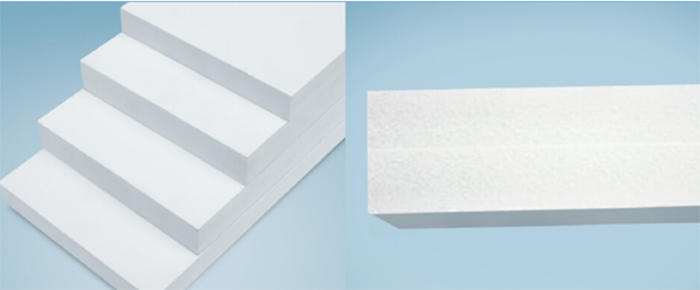
3. Foaming cross-section cells
1. The reasons for the appearance of cells or bubble stratification in the cross section can be attributed to one point, which is insufficient melt strength. The reasons for insufficient melt strength are: first, excessive foaming agent or insufficient foaming regulator or the uncoordinated ratio of the two. , or foaming regulator quality issues. The second is poor plasticization, low processing temperature or excessive lubrication.
2. There are two factors that cause foaming or foaming in the cross section of the foamed plastic sheet: one is that the local strength of the melt itself is too low, and the foaming is formed from the outside inward; the other is that the pressure around the melt is too small, and the foaming occurs locally. The cells expand, their strength weakens, and broken cells are formed from the inside out. In production practice, there is no obvious difference between the two effects, and they may coexist at the same time. Most of the broken holes are caused by the decrease in melt strength after the uneven expansion of local cells.
Table of Contents

With nearly 20 years in the intelligent extrusion equipment industry, he has held key roles at Jwell Machinery, including General Manager and Rotating Chairman. Since 2024, he has managed multiple subsidiaries, driving business expansion and industrial upgrades, while leading innovation in intelligent manufacturing and global growth.