EN
EN  ES
ES PT
PT SV
SV DE
DE TR
TR FR
FR RU
RU VN
VN ID
ID UZ
UZ MX
MX IN
IN
PE plastic extrusion machine is one of the five most commonly used plastics. It is a thermoplastic resin made from the polymerization of ethylene monomer.It is odorless and non-toxic, feels like wax, has good low temperature resistance and chemical stability.
In addition,PE has low water absorption, is insoluble in general solvents at room temperature, and has excellent electrical insulation. Depending on the polymerization method, molecular weight, and chain structure, it is divided into high-density polyethylene (HDPE), low-density polyethylene (LDPE), and linear low-density polyethylene. Density polyethylene (LLDPE) and ultra-high molecular weight polyethylene (UHMWPE).
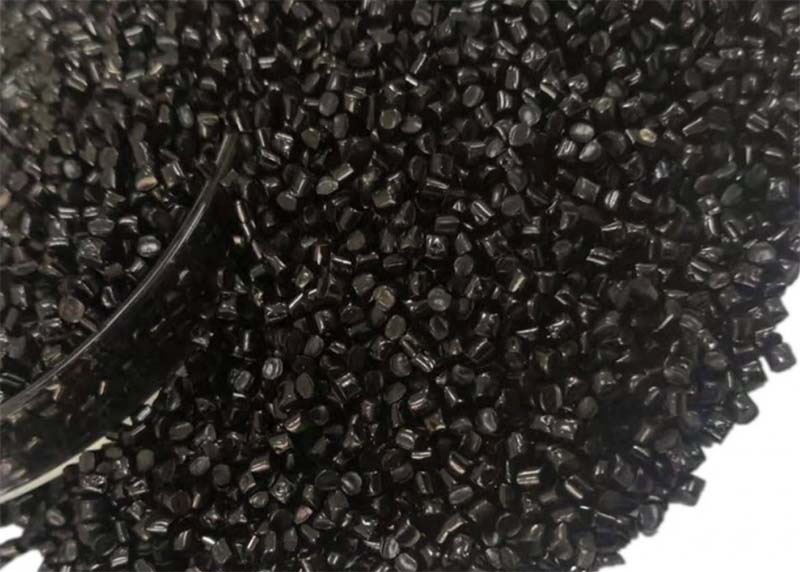
Due to its wide application, PE is often used after modification, as follows:
1. Add LDPE resin, antistatic agent, and carbon black into a high-speed mixer, mix and stir evenly, and then use an extruder to extrude and granulate.The extruder barrel temperature is 150~160℃, and the main engine speed is 600~800 r/min.You can obtain PE materials with volume resistivity ≤10²Ω.cm, surface resistivity ≤10³Ω, Vicat softening point >81℃, and antistatic properties.
2. Add HDPE resin, antistatic agent, white oil, and colorant into a high-speed mixer, mix and stir to make the preparation process uniform, and then use an extruder to extrude and granulate.After cutting, drying and testing the sample, the volume resistivity is ≤10²Ω·cm, the tensile strength is 23MPa, the tear strength is 20MPa, and it has the properties of self-extinguishing and not easy to catch fire.
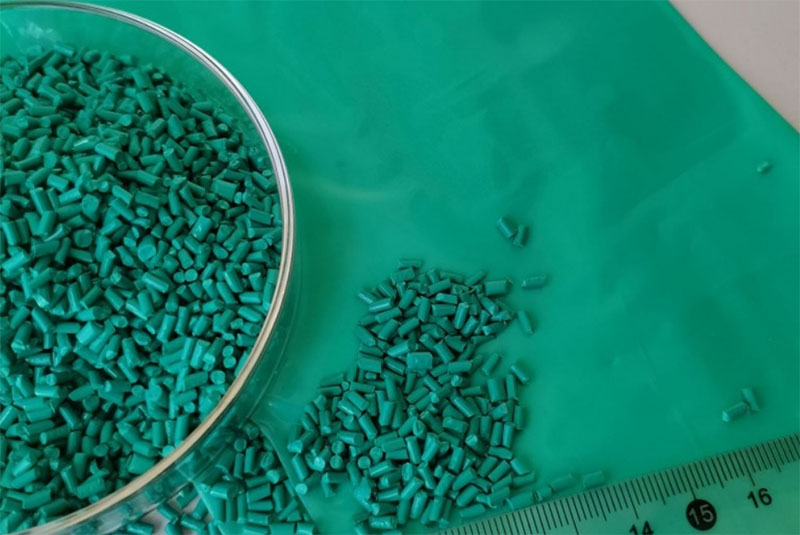
3. Put the resin HDPE (100), chlorinated polyethylene elastomer (CPE) (10-20), conductive carbon black (15-20) and appropriate amounts of other additives at a temperature of about 155C, and adjust the roller distance to an open mill of 1mm. , add HDPE, CPE, carbon black and additives in sequence, mix for 8 to 10 minutes, mix evenly, use a 0.5mm roller pitch to pass three times to discharge the tablets, cool and crush, and then use an extruder to extrude and granulate.
A PE material with good antistatic properties and excellent physical and mechanical properties can be obtained. When the amount of conductive carbon black is greater than 20 parts, the surface resistivity of the material is almost unchanged, but its impact strength and elongation at break decrease significantly.
The addition of chlorinated polyethylene elastomer can not only reduce the amount of carbon black, but also make the composite material have better antistatic properties (the surface resistivity is reduced to about 1x10⁷Ω) and impact properties.
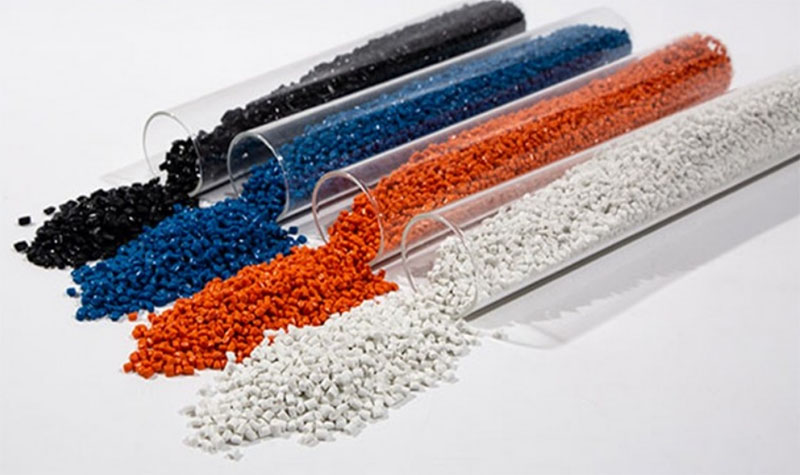
4.HDPE, methylbenzene glycol, DBP, soybean oil, triethanolamine, white oil, corn flour, dicumyl peroxide, propylene glycol adipate, add each raw material into a high-speed mixer according to the formula proportion, and stir evenly. Put it into the internal mixer for kneading at a temperature of 170~175C and a rotation speed of 900~950r/min. The mixed material after internal mixing is granulated by a granulator to obtain pellets. The pellets are placed in a water tank to cool, and then dried at normal temperature.
It can be obtained that the tensile strength is 31~37MPa, the elongation at break is 15%~18%, the impact strength material performance is 3.1~4.0kJ/m, the bending strength is 45~49MPa, and the 500h photoaging impact strength retention rate is 100%. Materials with volume resistivity (4.4~4.8)x10^(7)Ω.cm.
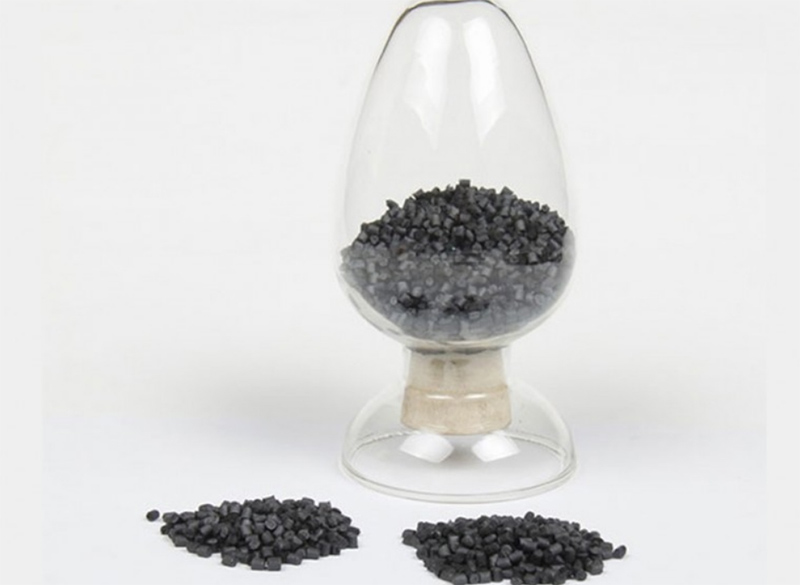
4. Mix the resin HDPE, modifier butene-ethylene copolymer, conductive agent carbon black, silane coupling agent KH-570, filler CaCO3, dispersant PE wax, lubricant HSt, and stabilizer CaSt according to the formula proportions. Note, The filler must be coupled first.Then add it to the internal mixer for internal mixing. After being fully dispersed, transfer it to the extruder for extrusion and granulation. You can get a material with a surface resistivity of 10^(8)Ω, a volume resistivity (20℃) of 1x10²Ω·cm, a tensile strength of 16.5MPa, and an elongation of 385%.

With nearly 20 years in the intelligent extrusion equipment industry, he has held key roles at Jwell Machinery, including General Manager and Rotating Chairman. Since 2024, he has managed multiple subsidiaries, driving business expansion and industrial upgrades, while leading innovation in intelligent manufacturing and global growth.