EN
EN  ES
ES PT
PT SV
SV DE
DE TR
TR FR
FR RU
RU VN
VN ID
ID UZ
UZ MX
MX IN
IN
There are many types of plastic sheets and they are widely used. Currently, the main types are polyvinyl chloride, polystyrene and polyester (PET). Among them, PET sheets have good performance, meet the national hygiene index requirements for molded products and international environmental protection requirements, and are environmentally friendly sheets.
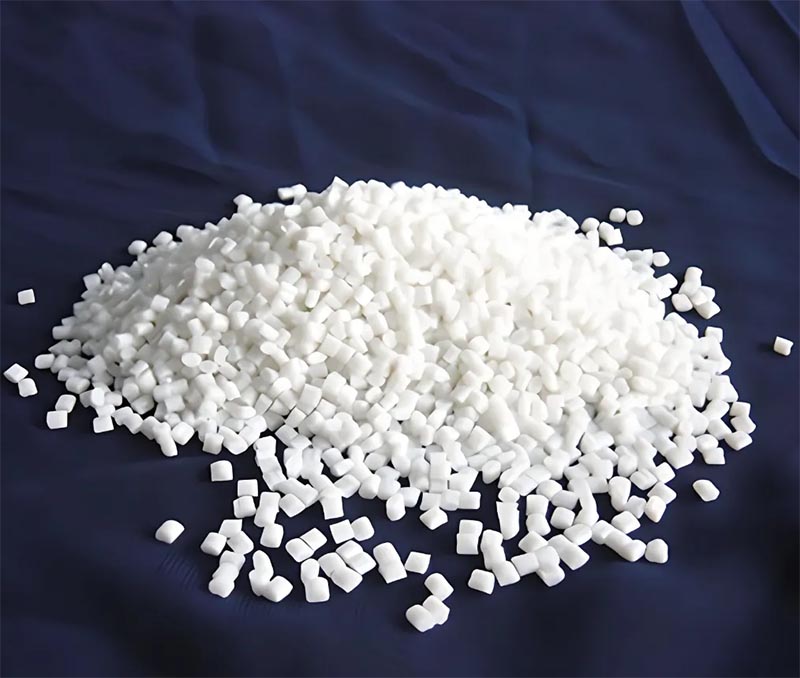
Raw materials of PET sheets
Like other plastics, the performance of PET sheets is closely related to molecular weight, and the intrinsic viscosity determines the molecular weight. The larger the intrinsic viscosity, the better the physical and chemical properties, but the poor fluidity, which makes molding difficult. The lower the intrinsic viscosity, the poorer the physical and chemical properties and the poorer the impact strength. Therefore, the intrinsic viscosity of PET transparent sheets should be selected from 0.8dl/g to 0.9dl/g.
PET production process
The main production equipment for PET transparent sheets are: crystallization tower, drying tower, extruder, die head, three-roll calender, and winder.
The production process is: raw material crystallization → drying → extrusion plasticization → extrusion molding → calendering and shaping → winding products.
The first step is crystallization
The PET slices are heated and crystallized in a crystallization tower to align the molecules, and then the glass transition temperature of the slices is increased to prevent adhesion during the drying process and blockage of the hopper.
Crystallization is generally an indispensable step, which takes 30 minutes to 90 minutes and the temperature is less than 149°C.
Step 2: Drying
Under high temperature conditions, water can cause PET to hydrolyze and degrade, resulting in a decrease in its characteristic adhesion. Its physical properties, especially impact strength, will decrease as the molecular weight decreases. Therefore, PET must be dried before melt extrusion to reduce the moisture content, and its moisture content should be less than 0.005%.
Dehumidification dryer is used for drying. Since PET material is hygroscopic, water will penetrate into the surface of the slice to form molecular bonds, and another part of the water will exist deep inside the slice, making drying difficult. Therefore, ordinary hot air cannot be used.
The hot air dew point is required to be below -40°C, and the hot air is passed into the drying hopper through a closed loop for continuous drying.
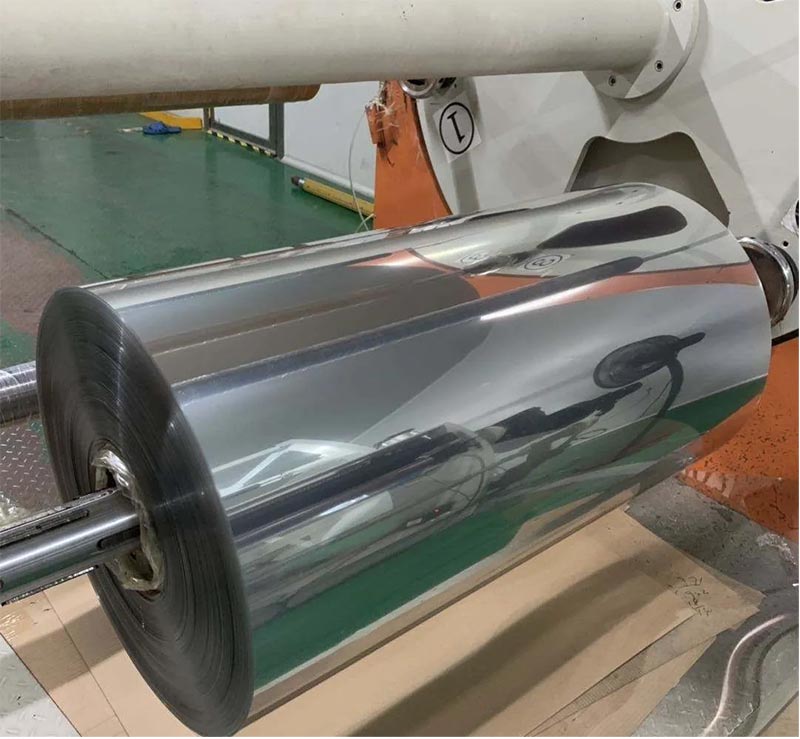
The third step is extrusion molding
After crystallization and drying, PET is transformed into a polymer with a distinct melting point. The molding temperature of the polymer is high and the temperature control range is narrow.
A barrier screw dedicated to polyester is used to separate the unmelted pellets and the melt, which is conducive to maintaining a longer shear process and increasing the output of the extruder.
A flexible die lip die head with a streamlined flow barrier rod is used. The die head is a pointed cone, and the streamlined flow channel and the scratch-free die lip should have good surface finish. The heater of the die head has a draining and cleaning function. The die lip gap of the die head should ensure good uniformity. The uniform die lip gap of the die head directly affects the transverse thickness deviation and calendering flatness of the sheet.
When extruding into sheets, the corresponding temperatures of the front area of the body, the middle area of the body, the rear area of the body, the screen changer, and the die are 240°C-260°C, 265°C-275°C, 260°C-265°C, 260°C-265°C, and 255°C-265°C, respectively.
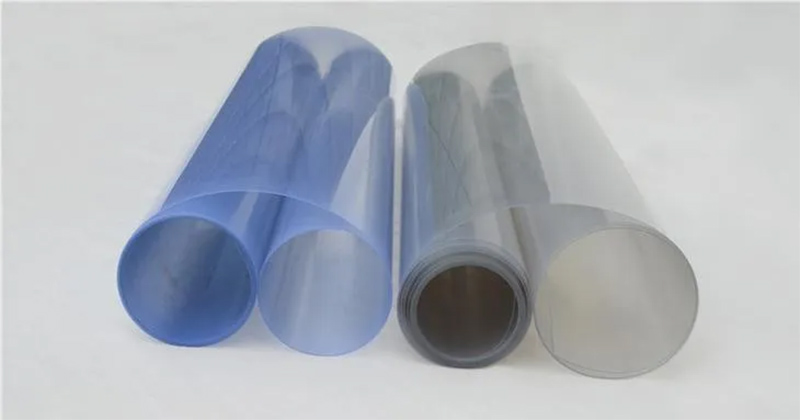
Step 4: Cool and set
After the melt comes out of the die, it directly enters the three-roll calender for calendering and cooling. The distance between the three-roll calender and the die is generally kept at about 8 cm. If the distance is too large, the sheet is easy to sag and wrinkle, resulting in poor sheet finish. In addition, due to the large distance, the heat dissipation and cooling are too slow, resulting in crystallization and whitening, which is not conducive to calendering.
The three-roll calender consists of three rollers: upper, middle and lower. The axis of the middle roller is fixed. During cooling and calendering, the temperature of the roller surface is 40°C-50°C, and the axis of the upper and lower rollers can move up and down. The roller gap is adjusted by moving the axis up and down. The temperatures of the upper and lower rollers are 30°C-60°C and 52°C-68°C respectively. The three rollers should ensure speed synchronization, and the speed should be above the extrusion speed. The purpose is to offset the expansion of the material when it leaves the die and reduce the internal stress of the sheet, so that the wrinkles disappear.
PET will crystallize in the range of 100°C-250°C, and the fastest crystallization rate is 140°C-180°C, so crystallization can be completed in just a few seconds. PET needs to pass through this crystallization temperature zone quickly and the temperature of the three rollers must be strictly controlled.
The fifth step is pulling and winding
The sheet passes through the calender roller and enters the traction device through the guide roller. The traction device consists of an active rubber roller and a passive rubber roller. The air pressure presses the two rollers tightly to prevent the sheet from being flattened by the calender roller when the sheet passes through the two rollers and is pulled to the winding device.
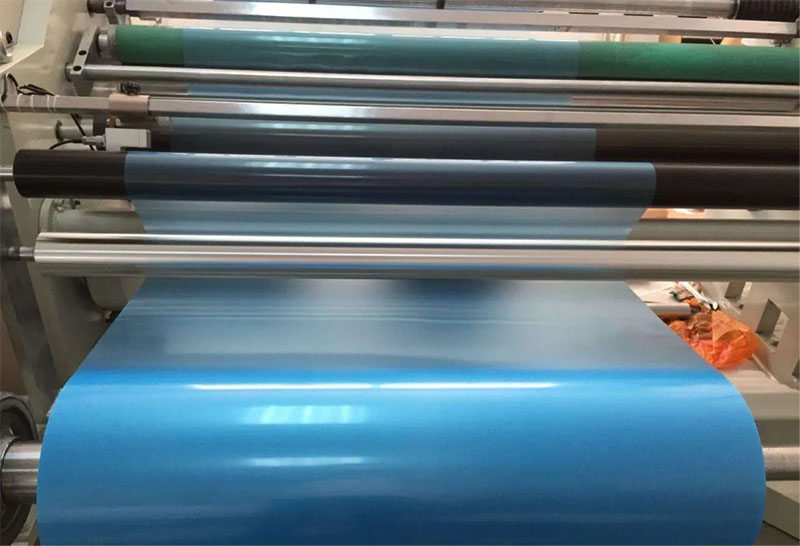
PET sheet production process
(1) The primary conditions for the production of PET transparent sheets are the drying time and the control of the hot air dew point. The drying effect directly determines the physical and mechanical properties and production of the sheet.
During drying, attention should be paid to the control of the drying temperature and time. The drying temperature and time should not be too high or too low. If the dew point cannot be reduced, the condition of the molecular sieve should be checked. The aged molecular sieve cannot absorb moisture in the air, and the purpose of drying and slicing cannot be achieved. At this time, the molecular sieve should be replaced.
(2) If the temperature of the melt exceeds 280°C, the PET sheet will change color or decompose. Therefore, the melt temperature should be controlled below 280°C.
(3) The gap between the die lip of the die head determines the flatness and thickness uniformity of the sheet. The temperature of the three rollers plays a key role in the transparency and surface finish of the sheet. The PET melt needs to quickly avoid the fastest crystallization rate temperature zone and instantly drop from the melting temperature to below the crystallization temperature. Therefore, the distance between the die head and the calender roller is particularly important.

With nearly 20 years in the intelligent extrusion equipment industry, he has held key roles at Jwell Machinery, including General Manager and Rotating Chairman. Since 2024, he has managed multiple subsidiaries, driving business expansion and industrial upgrades, while leading innovation in intelligent manufacturing and global growth.