EN
EN  ES
ES PT
PT SV
SV DE
DE TR
TR FR
FR RU
RU VN
VN ID
ID UZ
UZ MX
MX IN
IN
Principle of single screw extruder: The second section is called the compression section. The volume of the screw groove gradually decreases, and the temperature must reach the degree of plasticization of the material. Compression occurs here from the conveying section three, and is compressed to one here. This is called the compression ratio of the screw - 3:1. Some machines also have changes. The plasticized material enters the third section.
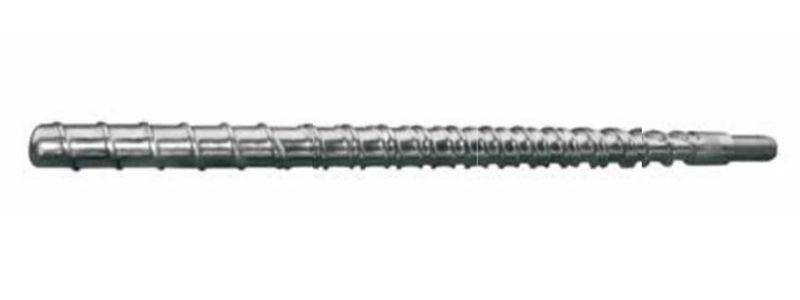
Principle of single screw extruder: The third section is the metering section. The material is kept at the plasticizing temperature here. It just delivers the melt material accurately and quantitatively like a metering pump to supply the die. At this time, the temperature cannot be lower than the plasticizing temperature, and is generally slightly higher.
The single-screw extruder is mainly used for extruding soft and hard polyvinyl chloride, polyethylene and other thermoplastic plastics. It cooperates with the corresponding auxiliary machines (including molding heads) to process a variety of plastic products, such as films, tubes, plates, ribbons, etc., and can also be used for granulation.
The plastic extruder has advanced design, high quality, good plasticization, low energy consumption, and adopts involute gear transmission. It has the characteristics of low noise, stable operation, large bearing capacity and long life.
Single screw extruder application
Extrusion of plates and sheets: Suitable for extrusion of profiles and plates such as PVC, PET, PS, PP, PC, etc. Extrusion of various other plastics such as wires, rods, etc.
Extrusion of profiles: Adjusting the speed of the extruder and changing the structure of the extrusion screw can be applied to the production of various plastic profiles such as PVC and polyolefins. Modified granulation: Applicable to the blending, modification and enhanced granulation of various plastics.
Single screw extruder is a type of machine in plastic extrusion production line. Extrusion molding is also called extrusion in plastic processing. In non-rubber extruder processing, the extrusion of the mold itself using hydraulic pressure is called extrusion. It refers to a processing method in which the material passes through the action between the extruder barrel and the screw, while being heated and plasticized, and is pushed forward by the screw, and continuously passes through the die head to form various cross-section products or semi-finished products.
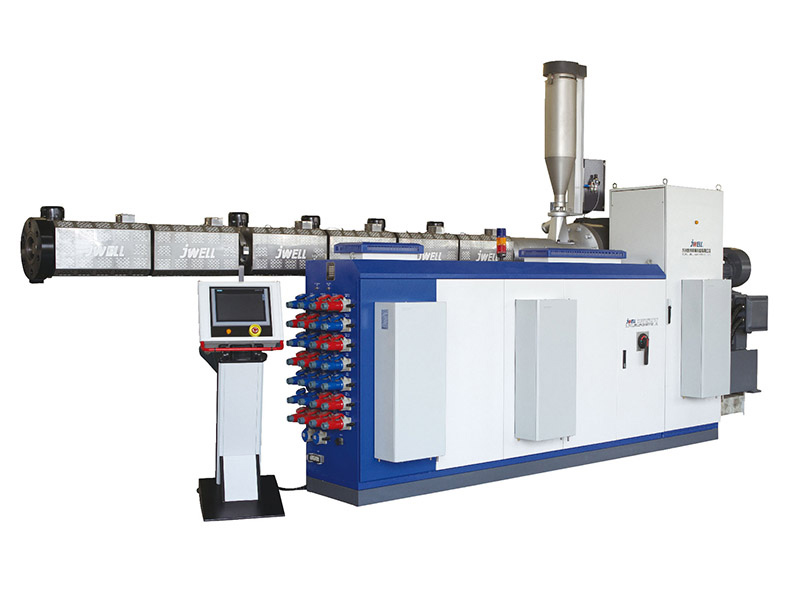
The raw materials enter the barrel from the hopper, and are transported forward to the feeding section by the friction and shearing action between the inner wall of the barrel and the screw surface under the action of the screw rotation. Here, the loose solids are transported forward and compacted at the same time. In the compression section, the depth of the screw groove becomes shallower and is further compacted. At the same time, the material temperature rises and begins to melt due to the heating outside the barrel and the friction and shearing action between the screw and the inner wall of the barrel, and the compression section ends. The material is made uniform in the homogenization section, and the melt is extruded at a constant temperature, quantity and pressure, and is formed after reaching the die head, and the finished product is obtained after shaping.
1. Extrusion method
According to plasticization method: dry extrusion and wet extrusion
According to pressurization method: continuous extrusion and intermittent extrusion
2. Features: continuous production, high efficiency, simple operation, wide range of applications
Table of Contents

With nearly 20 years in the intelligent extrusion equipment industry, he has held key roles at Jwell Machinery, including General Manager and Rotating Chairman. Since 2024, he has managed multiple subsidiaries, driving business expansion and industrial upgrades, while leading innovation in intelligent manufacturing and global growth.