EN
EN  ES
ES PT
PT SV
SV DE
DE TR
TR FR
FR RU
RU VN
VN ID
ID UZ
UZ MX
MX IN
IN
The blending and toughening of PP sheet machine is widely used in various fields due to its remarkable effect, low industrial investment, and rapid and easy implementation.
Blending and toughening modification refers to using other plastics, elastomers and inorganic powders as modifiers to blend with PP to improve the toughness of PP plastics.Common modified and toughened systems are mainly divided into the following types:
01 Plastic toughened PP system
Using other plastics as modifiers for PP toughening can not only achieve the purpose of toughening, but also improve the physical properties such as wear resistance and dyeability of the material.When using general-purpose plastics (such as polyethylene) as modifiers, it also has a greater price advantage.Plastic products commonly used in PP toughening modification include HDPE, LLDPE, EVA, PA, etc.However, due to its incompatibility with PP, it is often necessary to increase the amount of modifier or add a compatibilizer to achieve higher toughness of the system.
02 Rubber or thermoplastic elastomer toughened pp system
Blending toughening of rubber or thermoplastic elastomer with PP is a method that has been widely studied and has obvious toughening effects.This type of modifier mainly includes EPR, EPDM, SBS,BR, IBR, NR and polyolefin elastomers (such as POE), etc.
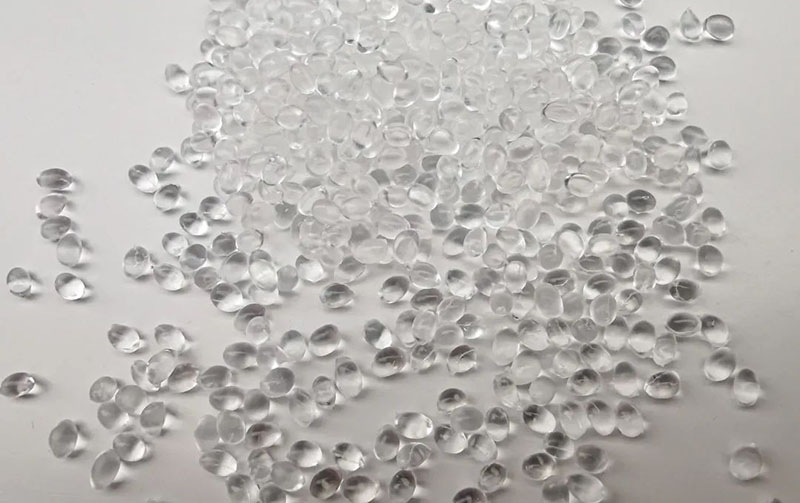
Different types of rubber can significantly toughen PP, but the toughening effects are different.There are many factors that affect the toughening effect of rubber, such as the content, size and shape of rubber particles, the interface bonding and compatibility between rubber and PP matrix, the cross-linking of rubber and the relaxation behavior of rubber.
03 PP/elastomer/plastic ternary blend system
Although the increase in the amount of elastomer greatly improves the impact performance of the system, it also brings about losses in rigidity, strength, heat distortion temperature, and fluidity, and the cost also increases, causing limitations in practical applications.
For this reason, people consider adding elastomers and plastics to PP to form a ternary blending system to improve mechanical properties and reduce costs.The most common one is to add PE. PE can be used as the main component in the system to form a mixed matrix with PP, or it can also be used as the third component (toughening agent).
04 Inorganic rigid particle toughened PP system
Elastomer-toughened plastics have indeed achieved industrial success, but while improving toughness, they significantly reduce stiffness, strength and service temperature.In 1988, while studying the fracture toughness of CaCO3-toughened PP composites, fracture mechanics was used to analyze the advancement of energy dissipation, and a new approach to filling reinforcement and toughening was proposed for the first time in China.Currently commonly used inorganic rigid particles mainly include CaCO3, BaSO4, kaolin, talc, mica, etc.

The mechanism of inorganic rigid particles toughening polymers is not yet clear. It is generally believed that: 1. When the polymer is deformed by force, the presence of rigid inorganic particles produces a stress concentration effect, causing the matrix around it to yield. The yielding of this matrix will absorb a large amount of deformation work, resulting in toughening effect;2. The existence of rigid inorganic particles can hinder crack expansion or passivation and terminate cracks. The reason for hindering crack expansion is due to the pinning effect, while the reason for particle passivation or crack termination is the partial debonding of the two-phase interface.
According to the above mechanism, the requirements for toughening are that the matrix must have appropriate toughness and that there must be a moderate bonding force between the matrix and the particles, which inevitably requires appropriate active treatment on the surface of the inorganic particles.
05 PP/elastomer/inorganic particle ternary composite system
In order to balance the relationship between toughness and modulus, PPelastomerinorganic particle ternary composite materials are gradually favored by researchers, such as PP/POE/BaSO4, PP/EPR/CaCO3, PP/EPDM/talc, PP/POE /CaCO3 etc.The elastomers and inorganic particles used in this ternary system are becoming more and more diversified. This blending method has opened up new ways to further improve the comprehensive performance of PP and expand its application fields.
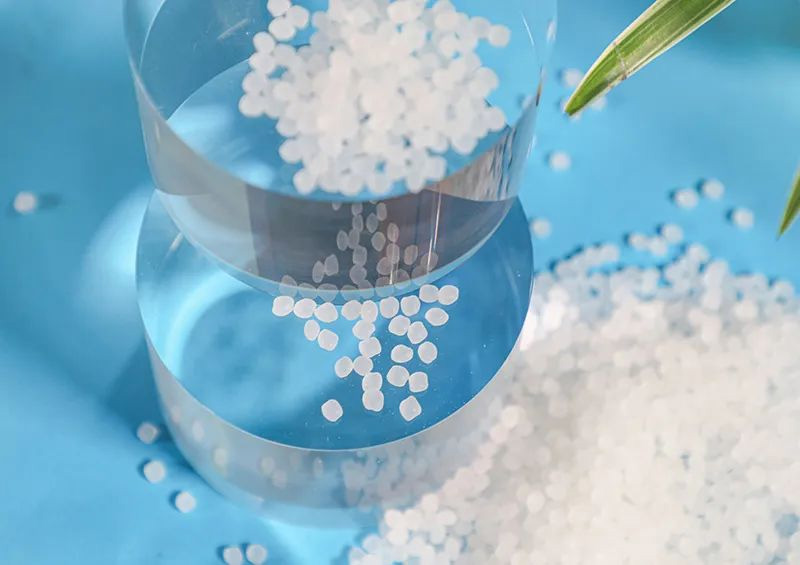
The ternary composite system was proposed because when studying to increase the interfacial bonding between inorganic particles and PP, it was considered that if elastomer was introduced, it would not only play a toughening role as the third relative system, but also form an interface layer on the surface of the inorganic particles, thus Overcome stress concentration through shear deformation, preventing the peeling of inorganic particles and PP matrix and the development of cracks.
The blending and toughening modification of PP involves complex and diverse blending systems. It can be seen that using a single raw material as a toughening agent often cannot meet the high performance requirements of plastic products.
Each toughening agent on the market has different formulas and different ingredient ratios. At the same time, the dosage added will also be different according to the different properties of the raw materials of plastic particles. It is also the goal of plastic manufacturing companies to reduce the material cost as much as possible while meeting the performance requirements. pursuit, so it is particularly important to choose a cost-effective toughening agent.

With nearly 20 years in the intelligent extrusion equipment industry, he has held key roles at Jwell Machinery, including General Manager and Rotating Chairman. Since 2024, he has managed multiple subsidiaries, driving business expansion and industrial upgrades, while leading innovation in intelligent manufacturing and global growth.