EN
EN  ES
ES PT
PT SV
SV DE
DE TR
TR FR
FR RU
RU VN
VN ID
ID UZ
UZ MX
MX IN
IN
EVA, vinyl acetate copolymer, polymer material. EVA midsole is lightweight and has good physical properties. It is the most widely used material in high-end lightweight shoes,sports shoes, and casual shoes. Today, we will learn about the formula raw materials and four major processes of EVA foaming.
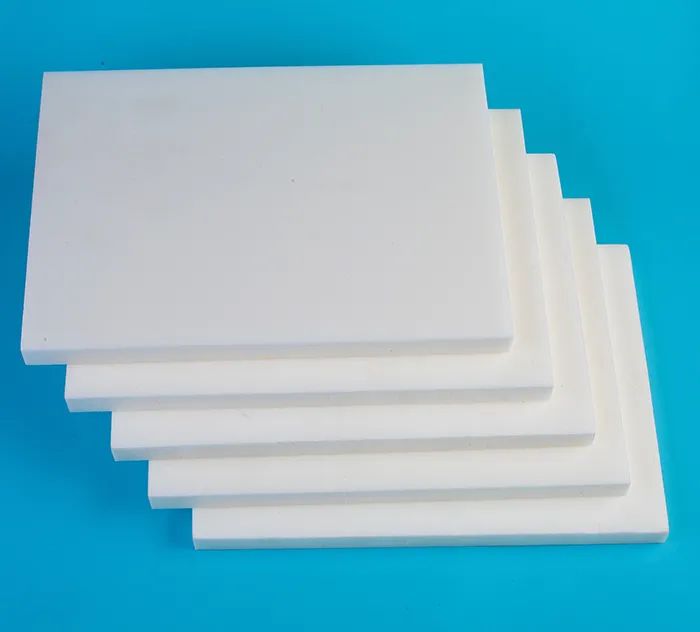
1. Things about EVA foaming formula
EVA foaming formula generally consists of the following raw materials: main ingredients, fillers, foaming agents, bridging agents, foaming accelerators, and lubricants.
The main material is EVA or PE. Of course, in order to improve the physical properties of the product, you can also add some other materials, such as rubber, POE (polyethylene octene co-elastomer), etc., and you can even add a little TPR (a kind of plastic that has the properties of both rubber and thermoplastics). materials) to enhance certain physical properties.
As for EVA, the main indicator is VA content. Its level is directly related to almost all the properties of EVA foam products. certainly. Some can foam using only PE. The specific main ingredients to use still depend on the requirements of the product.
Fillers, currently calcium carbonate or talc are generally used. Its purpose is to reduce costs, increase product rigidity, etc., and it can also play a role in thermal conductivity. Generally, particle size is used as the quality indicator (of course, moisture content is also one aspect), such as 120 mesh, 400 mesh, etc. In principle, the finer the better, but of course the price will be higher. The maximum dosage in the formulas I have seen is 40Phr (the dosage is the percentage of the main ingredient).
Foaming agents are generally used as AC series foaming agents, such as AC-3000H. AC series foaming agents are high-temperature foaming agents with a decomposition temperature of more than 220 degrees.
There are also low-temperature foaming agents, such as AD-300, which has a decomposition temperature of 140 degrees, and medium-temperature foaming agents. Because the price difference is not big, and high-temperature foaming agents are relatively more stable, many old EVA manufacturers are now switching to high-temperature ones, and some are also used in combination. The dosage of AC depends on the specific magnification.
As a bridging agent, the most commonly used one now is DCP (di-octyl phthalate). In the past, TAIC, PL400, etc. were also used. The half-life of DCP is 1 minute at 180 degrees and 10 minutes at 130 degrees. Therefore, when training materials, the temperature should be controlled below 120 degrees.
For some products that have requirements for odor, another bridging agent BIPB can be used, which is generally used in conjunction with TAIC. The dosage of DCP is generally 0.5-0.6Phr in flat foaming and small in-mold foaming, and 0.8-1.0Phr in injection foaming. Of course, there are also some appropriate additions and subtractions, and some use it differently.
Foaming accelerators, there are two commonly used ones now, zinc oxide powder and zinc stearate powder. We used to use these two combinations here, but now we only use zinc oxide. A single product can also achieve the effect, and the stability of the product may be better. Zinc oxide can reduce the decomposition temperature of AC to about 160 degrees, which facilitates production. We have a consensus here that the dosage of zinc oxide generally does not exceed 0.2Phr. If the product is too much, the shrinkage will be relatively larger. Of course, if it is too little, the foaming speed will be too slow, so it is best not to be lower than 1.0hr/.
Lubricant, usually stearic acid. In fact, it doesn't have much effect. It just prevents the material from sticking to the machine when practicing. Using too much is not good because it can reduce the friction between parts and reduce most physical properties. 0.5Phr is recommended.
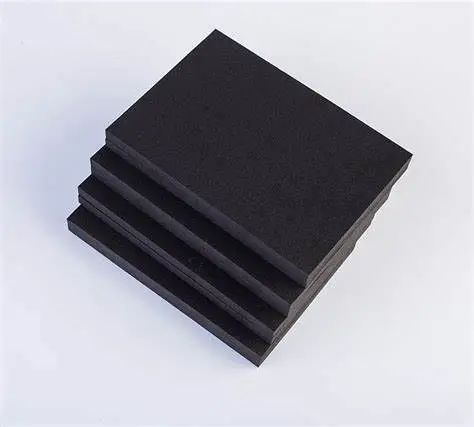
2. About technology
Generally speaking, there are four processes for EVA foaming, traditional flat plate large foaming, in-mold small foaming, injection and supercritical foaming.
1Injection process
This process will be the mainstream in the future. The product is made in one process, but the precision of the mold is higher. The principle is similar to the injection molding in the plastic industry, except that the injection mold is opened immediately, and the mold temperature is different. That is, the injection of EVA is just an adjustment of the mold temperature and mold opening time of the plastic injection molding. Nowadays, most of the well-known sports shoes are made using this method. Compared with other methods, the efficiency is really far behind.
2Traditional flat plate large foam
Nowadays, small factories generally use this method, and the cost of machinery and equipment is relatively low. This process produces plates, which are then made into products through processes such as punching and edge grinding. The foaming conditions are relatively fixed, the temperature is 160-170, the time is determined by the thickness of the mold, generally 90-110 seconds/MM, and the pressure is 150KG/square CM.
3Small foaming in the mold
This process is mainly used in shoe materials. Sports shoes are used for the first foaming of the secondary midsole. The material prepared according to the formula is granulated, weighed and put into the opened mold. After foaming, the shoe will look like the general shape.
The difficulty of this process is the symmetry of the mold and formula, otherwise it will be difficult to control the magnification and hardness at the same time. Often the size is qualified but the hardness is not enough, and the hardness is enough and the size is too small.
The foaming conditions of this process are relatively flexible, depending on the shape and structure of the product. Of course, the main changes are time and temperature.
I mentioned the secondary midsole earlier, and here I will introduce the second molding. Grind off the skin of the previously foamed rough embryo, press it into the finished mold, and form the product through two steps of heating and cooling.
The heating temperature is 125-135, and the pressure is 50KG/cm2. After heating for a certain period of time, it is then water-cooled, and it is taken out as a secondary midsole. The bottom size of this kind of compression is relatively stable, and the physical properties are relatively better.
4Supercritical foaming
The molecular chain of EVA is linear, so a cross-linking agent is usually added during the foaming process to lock the gas through the cross-linked structure. Therefore, supercritical foaming of EVA needs to solve the problem of how to lock the gas.

Judging from patent documents and some company information, the supercritical foaming process of EVA is basically the same route: cross-linking and granulation after internal mixing and blending, molding to obtain a pre-vulcanized shoe sole, and placing the sole into an autoclave for foaming In the device, a physical foaming agent is introduced into the kettle, and the microporous foam sole material is obtained using a pressure reduction method.
The morphological changes of EVA materials: granulation-injection/injection molding-foaming-sole.
This foaming process can be simply understood as changing the chemical foaming agent to a physical foaming agent during the molding foaming process, and adding a quick pressure relief operation to obtain a supercritical foamed EVA sole. If you want the entire process to be environmentally friendly and clean, the previous cross-linking process can be replaced by radiation cross-linking and other methods.

The supercritical foaming process has become more and more mature in the past two years, and the equipment and processes have been gradually improved. Among them, regulating the formula and process to achieve excellent performance and control shrinkage and cost is the key.

With nearly 20 years in the intelligent extrusion equipment industry, he has held key roles at Jwell Machinery, including General Manager and Rotating Chairman. Since 2024, he has managed multiple subsidiaries, driving business expansion and industrial upgrades, while leading innovation in intelligent manufacturing and global growth.