EN
EN  ES
ES PT
PT SV
SV DE
DE TR
TR FR
FR RU
RU VN
VN ID
ID UZ
UZ MX
MX IN
IN
Composite materials are prepared by combining two or more other materials so that they complement and improve each other, yet maintain their own unique characteristics in the final product.
plastic sheet extrusion machine
Due to their excellent performance, composite materials have been widely used in various fields, and this series of articles will take a comprehensive inventory of the main application fields of composite materials, including: aerospace, automotive industry, construction, energy, energy storage, infrastructure, marine , pipelines and storage tanks, sports and entertainment, transportation and other ten fields .
1
Aerospace
Major aeronautical OEMs such as Europe's Airbus and US Boeing have shown potential for large-scale application of composites in aviation, while NASA has been seeking composites manufacturers for rockets and other spacecraft with innovative composite solutions.

The proportion of composite materials in each new generation of aircraft developed by Boeing has increased, and the proportion of composite materials in the Boeing 787 Dreamliner has exceeded 50%. Major structural components of the Boeing 787 Dreamliner are made from more carbon-fiber "sandwich" composites and advanced carbon-fiber laminates, moving away from archaic fiberglass composites.
On the other hand, aramid fibers are widely used in the construction of leading and trailing edge wing assemblies as well as very stiff, very light bulkheads, fuel tanks and floors. In addition, advanced composite materials composed of high-strength and rigid fibers embedded in common matrix materials are also widely used in the aerospace industry.
2
Automotive industry
As the largest end-use market for composite materials, the automotive industry is no stranger to composite materials. In addition to pioneering vehicle design, composite materials are helping to make vehicles lighter and more fuel-efficient. Automobiles require reliable, synchronized mechanisms with components that can withstand friction, corrosion and temperature fluctuations.
Inaccuracies in design or production will affect performance and can cost the manufacturer business. Compared to metallic steel, the performance of composite materials meets and exceeds the demands of the automotive industry. These unique properties include:
low coefficient of thermal expansion
Excellent dimensional stability for shape retention and reliability
Corrosion resistance in wet and dry conditions
High impact strength to withstand repeated use
Relatively light weight to reduce the overall mass of the vehicle
Better sound insulation and better performance
Acceptability to paint, including ability to meet Class A surface requirements, paint and bake processes
Easy to manufacture and relatively low cost

Typical applications of composite materials in automotive interior and exterior structures
Composite materials have been widely used in a series of automotive structural parts, from headlight housings of headlights to electrical and thermal insulation components under the hood, to the exterior of the car body Parts, interior structures and trim parts. Common applications of composite materials in automotive parts are listed below:
Deflectors and spoilers
intake manifold
Battery case and cover
Bumpers and bumper beams
Cylinder heads (e.g. valves, rocker arms, cams) covers
Window/sunroof frame
Front grill opening plate
housing of the front headlight
Heat shields (e.g. engine, transmission)
Struts and Coverings
3
Construction sector
The construction community is experiencing substantial growth in the understanding and use of composite materials. Composites provide architects and designers with high performance and value in large-scale projects, and their use in commercial and residential construction is increasing.

In a recent article, Palari Group builds sustainable 3D printed communities and homes. Mighty Buildings is a construction technology company that uses 3D printing, robotics, and automation to create affordable and sustainable homes. The fundamental building block of the house is the Mighty Panel, a 3D printed 100% polymer composite panel with structural, insulation, MEP integration, air/moisture/fire barrier and interior/exterior finishes. Mighty Buildings prints individual panels at its factory, then assembles them into houses at the construction site.
In construction, the high-strength properties of carbon fiber are playing a positive role. Carbon fiber is extremely strong, soft and easy to lay, and can be used to repair and reinforce buildings to make them look like new buildings. Carbon fiber laminates are widely used to increase the load bearing of floors and columns. In addition, carbon fiber is resistant to earthquake damage, so it can also be used for structural reinforcement of new buildings and as a replacement for prefabricated steel.
4
Energy storage field
Multifunctional energy storage composites (MESCs) are developed by embedding battery layers into the structure, with interlocking rivets securing the battery layers, helping to improve mechanical properties. Experimental tests show that MESCs can have comparable electrochemical behavior to other materials. Compared with pouch cells, MESCs achieve 15 times higher mechanical stiffness at 60% encapsulation efficiency.

Other representative applications of composites in energy storage include:
Hydrogen Tanks for Aerospace
Hydrogen Fuel Cell System
Natural composite material battery
5
infrastructure field
Strictly speaking, there is no strict distinction between infrastructure and buildings. In recent years, with the emergence of new, low-cost, high-performance structural composite materials, infrastructure construction has entered a new stage. Not only can fiber-reinforced plastic (FRP) replace steel in many load-bearing structures, but it has also been proven feasible to reinforce concrete beams with internally or externally bonded fiber-reinforced plastic (FRP).

Composites made of glass, aramid or carbon fibers are increasingly being considered for pretensioning, posttensioning or reinforcing concrete. To replace corroded rebar, FRP systems may eventually be used in concrete bridge decks or other outdoor concrete floor structures.
Corrosion resistance is one of the main factors that make carbon fiber so attractive in the infrastructure sector. Carbon fiber will not corrode and rust, so the carbon fiber concrete layer can be thinned a lot, because there is no need to consider anticorrosion like the steel core, which greatly reduces the amount of concrete used in the building, and also has other benefits, such as reducing costs and speeding up construction progress, shorten drying time, etc. In addition, because of its good electrical conductivity, carbon fiber can be used to shield electromagnetic interference, can transmit building parameter information, and become an integral part of smart buildings.
6
New energy field
The use of composite materials in renewable energy will play an increasingly important role by creating structures that can harness sustainable energy. Lower weight, lower transport and installation costs and, most importantly, lower maintenance costs over the life of the structure compared to metal structures have positioned composites as the de facto material for large-scale projects. Provide economical solutions.
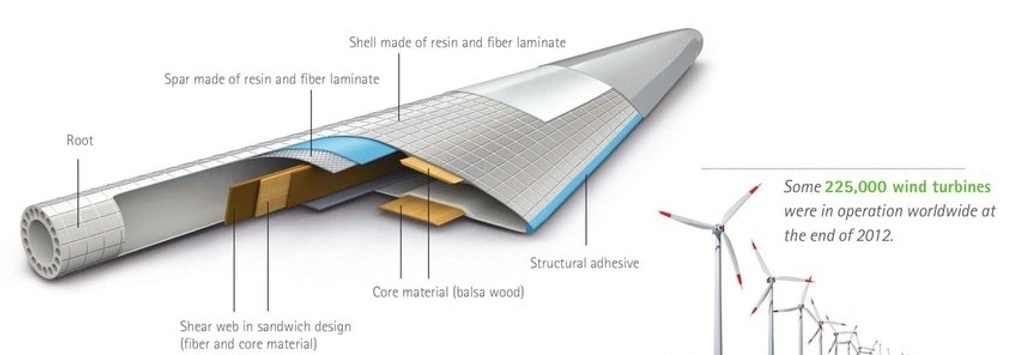
The light weight and complex airfoil shapes of wind turbine blades have made composites a leader in the field, using molds designed to manufacture blades economically with minimal labor. Current research and development is aimed at meeting the increased size required for turbine and rotor blades for land-based and offshore systems.
7
ocean field
For decades, FRP composites have been successfully used in marine applications such as radomes and mass structures, superyachts, work boats and leisure boats. More recently, FRP has been used in lesser-known applications such as bearings, propellers, commercial hatches, exhausts, and roof structures .

The use of glass fiber composites in marine applications was one of the first significant areas of GRP application. It has revolutionized the ability to design and manufacture large composite structures in multiple domains. The boat is manufactured in the UK using a variety of processes including hand laid GRP, resin infusion, thermoplastic and high performance carbon fiber prepreg for racing yachts.
The main advantages of GRP in marine applications are:
Environmental resistance, including freedom from rot, corrosion resistance, etc.
Ability to process seamless, complex-shaped structures
Ability to adjust strength to suit load conditions
Excellent strength-to-weight properties - GRP marine structures are typically half the weight of equivalent steel structures.
low maintenance and easy repair
excellent durability
Rowing boats use composite materials more extensively than any other marine structure. Due to special requirements, the materials used are not typical marine construction materials. Minimum weight and maximum stiffness were crucial in its design in order to be able to sail at maximum speed and resist the effects of waves and other elements of the marine environment.
Carbon fiber reinforced epoxy composites are commonly used for honeycomb or foam cored hulls, frames, keels, masts, rods and booms, carbon winch drums and shafting . The use of FRP helps to improve performance and minimize the risk of navigational defects and breakdowns under varying international sailing conditions.
8
Piping system field
Composite piping systems have been used in chemical plants for more than 25 years. The use of composite materials in industrial applications became widespread in the 1970s. Today, composite piping and tank installations are on the rise in above- and below-ground, commercial, municipal, and residential applications. Low-cost natural gas is further expanding the market as new chemical facilities are developed and older facilities expanded.

Typical applications and products of composite pipes include:
air pollution control
aquaculture
chemical processing
desalination
Petroleum and natural gas
Water and Wastewater Treatment
pipeline
Fittings and Liners
Pipeline system
Fuel tank lining
oil storage tank
Process container
Scrubber
valve
9
Sports and leisure field
Carbon fiber has always been prominent in the field of sporting goods, from racing to skiing, golf, fishing and tennis, carbon fiber has been widely used. With the increasing popularity and falling price of carbon fiber, it has been used more in sporting goods.
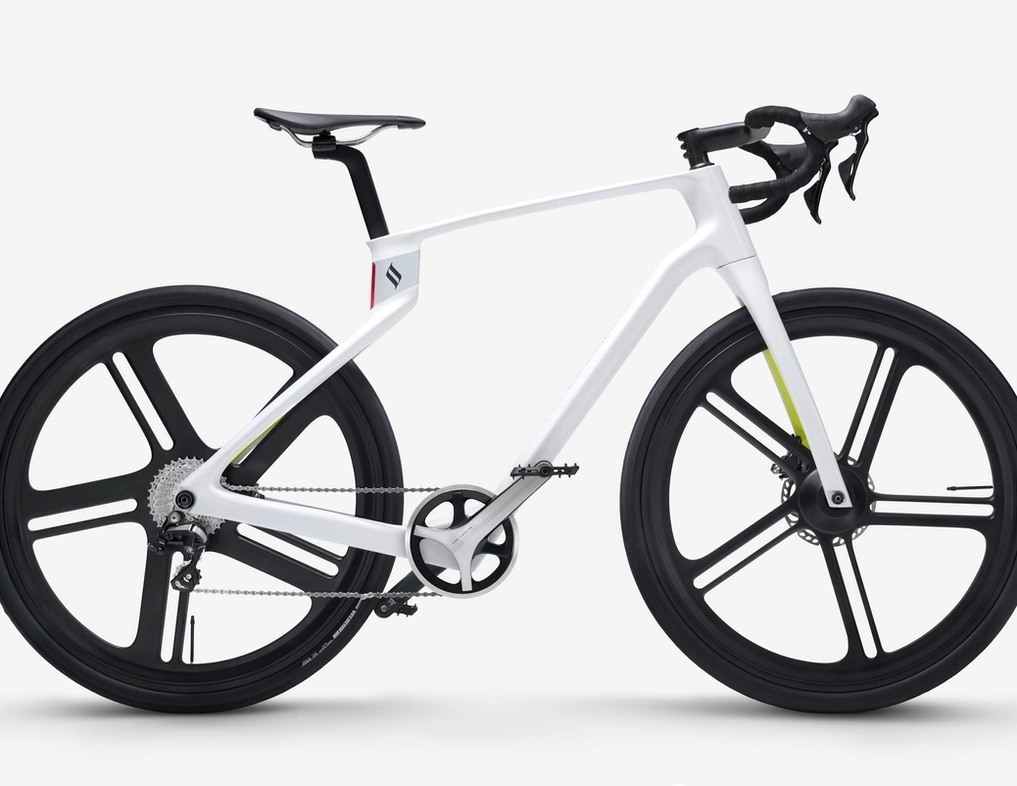
Carbon fiber is now used in many rackets, snowboards, sleds, hockey sticks, fishing rods, golf clubs, bicycles, surfboards, kites, shoes and other sports products.
Carbon Fiber in Sports and Leisure
At present, 7 of the 10 most popular outdoor sports and leisure activities use composite materials. Fiberglass and carbon fiber reinforced composites continue to replace wood and metal in fishing rods, tennis rackets, spars/shafts for kayak paddles, windsurfing masts and boards, hockey sticks, kites and bicycle handlebars.
10
Transportation
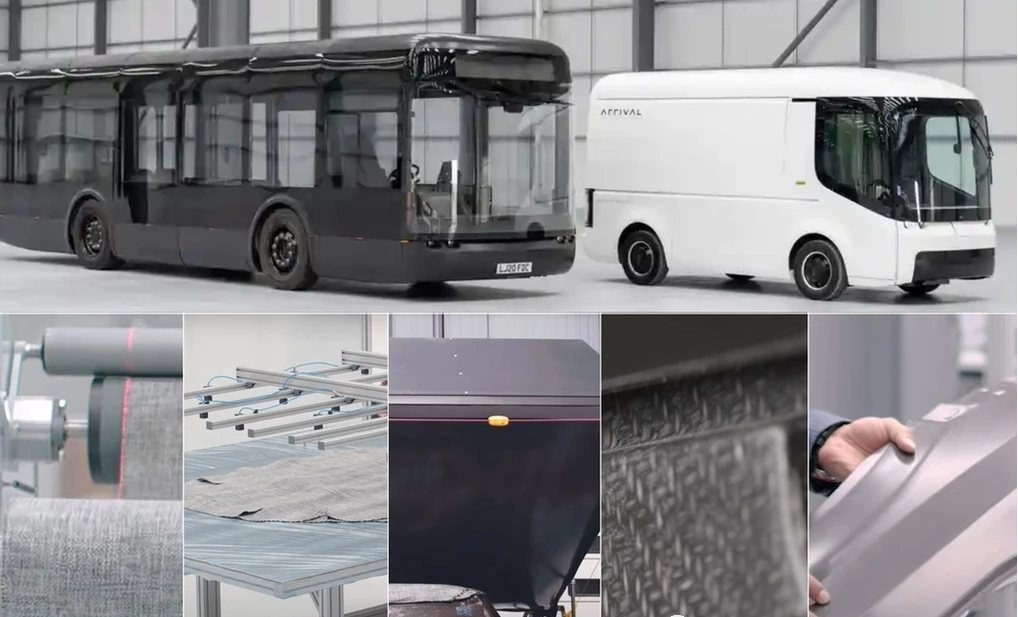
There is a trend in the transportation industry to use larger vehicles. Whether it's a bus, train or articulated truck, the idea is simple: carry more cargo. The challenge is to find ways to safely carry larger loads while saving fuel and reducing environmental impact. Composites offer an impressive answer to this challenge.

With nearly 20 years in the intelligent extrusion equipment industry, he has held key roles at Jwell Machinery, including General Manager and Rotating Chairman. Since 2024, he has managed multiple subsidiaries, driving business expansion and industrial upgrades, while leading innovation in intelligent manufacturing and global growth.