EN
EN  ES
ES PT
PT SV
SV DE
DE TR
TR FR
FR RU
RU VN
VN ID
ID UZ
UZ MX
MX IN
IN
As the most common way of coloring plastics, masterbatch is widely used in the plastic processing industry. Dispersibility, as one of the most important performance indicators of masterbatch, has also attracted much attention from practitioners and often causes problems to practitioners. So, what is the dispersion of color masterbatch?
The so-called dispersion refers to the degree of uniform dispersion of the color masterbatch in the plastic material. Whether it is an injection molded product, extrusion or film blowing process, if the dispersion is not good, the final product may have uneven color distribution, deep or shallow irregular lines, or pinhole-like powder spots. The quality of the class is abnormal.
Obviously, dispersion has a crucial impact on the quality of plastic products.
So, what are the reasons for poor color dispersion? Is it all a matter of color masterbatch?

Poor toner dispersion
Color masterbatch is a highly concentrated pigment polymer. A large amount of powder aggregates together, which will inevitably affect the dispersion of color masterbatch. Many toners have particularly strong aggregation properties, such as the most common titanium dioxide, carbon black, etc., which are extremely easy to clump. According to the customer's final product and process method, selecting the appropriate toner type and the appropriate particle size of the toner has an important impact on the final dispersion of the color masterbatch.
Static electricity effect
Many color masterbatch do not add antistatic additives. When customers use the color masterbatch, they often mix the color masterbatch and the raw materials together and then stir. This easily generates static electricity, resulting in uneven distribution when the color masterbatch is mixed with the raw materials. This results in color inconsistency between the front and back of the product.
The melting finger of the color masterbatch is not suitable
Many times, when selecting a carrier, masterbatch suppliers will choose a resin with a higher melting index as the carrier. However, the higher the melt index, the better. It is necessary to fully consider the physical properties and surface requirements of the final product and the good processability of the masterbatch. A melting index that is too low can easily cause poor dispersion of the color masterbatch in the product. The melting index of the color masterbatch needs to take into account the conditions of the carrier and the powder. Designing a suitable melting index is of great help to the dispersion of the color masterbatch.
The addition ratio of color masterbatch is too low
Considering the physical properties of the final product and the total cost of the coloring scheme, some color masterbatch suppliers will design a lower color masterbatch addition amount, resulting in poor dispersion of the color masterbatch in the product.
The dispersion system of color masterbatch is not suitable
In order to break up the agglomerated powder in the color masterbatch, some dispersants and lubricants are added during the processing of the color masterbatch to assist the dispersion of the powder in the color masterbatch. If the dispersant is not selected appropriately, it will inevitably lead to poor dispersion of the color masterbatch.

Effect of density of color masterbatch
Toners with higher density are often added to color masterbatch. For example, in order to achieve strong hiding power of color masterbatch, a large amount of titanium dioxide is added, and the density of titanium dioxide is about 4.0g/cm³ (3.8g/cm³~4.4 g/cm³), which is greater than the density of many resins. Therefore, the density of the color masterbatch may be significantly different from the density of the resin. It is easier for the color masterbatch to deposit at the bottom of the mixer during mixing, causing color inconsistency between the front and back of the product.
The carrier of color masterbatch is not suitable
The carrier of color masterbatch is used to carry toner and other functional additives. The type, quantity, model, fusion index and even shape of the carrier will greatly affect the processability and dispersion of the color masterbatch. For example, for color masterbatches that are also used in polyolefin products, should the carrier be PP, PE or EVA, one carrier or a mixture of several carriers, which brand it is, how many melting fingers to choose, whether to choose powder or granules, etc. All will affect the final performance of the color masterbatch.
Processing of masterbatch
The processing process of color masterbatch is a combination of various processes. What kind of mixing equipment to choose? How to design the mixing process? What kind of granulation equipment to choose? What screw combination to choose? What granulation process to choose? Even the choice of cooling process will affect the final performance of the color masterbatch.
Process impact
The plastic molding process has a certain impact on the dispersion of color masterbatch. As far as the injection molding process is concerned, temperature, pressure and holding time will all affect the dispersion of the color masterbatch.
Equipment impact
Plastic molding equipment will also have a certain impact on the dispersion of color masterbatch. For example, if the screw is severely worn, the shear force will be greatly reduced, which will weaken the dispersion of the color masterbatch.
Effect of mold
For injection molding, the mold structure such as the position of the mold inlet will have a certain impact on the molding of the product and the dispersion of the masterbatch. For extruders, the flow channel structure and slope of the mold will affect the dispersion of the product.
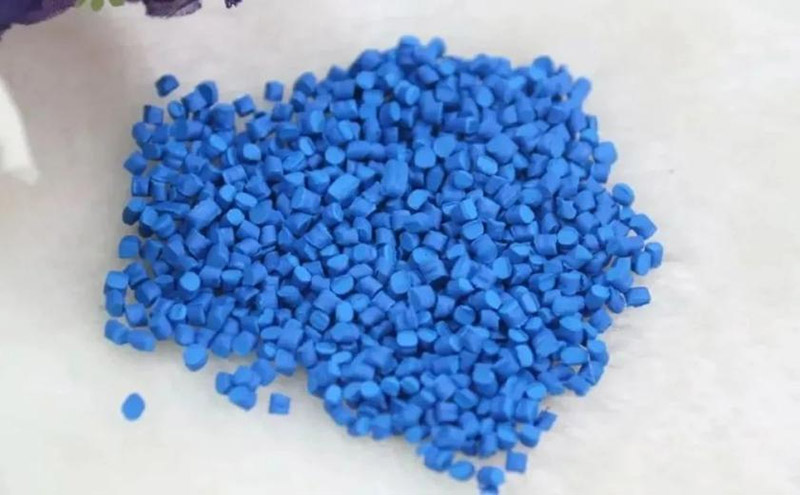
The extrusion temperature setting, etc., will also have a certain impact on the dispersion of the final product.
It’s not scary at all when a product has poor dispersion. All relevant parties should brainstorm in a timely manner, analyze the problem, find the problem, and then take countermeasures one by one.
In many cases, the problem of dispersion is not a simple material problem or process problem. It may require the joint efforts of all relevant parties to implement improvements in their respective fields and ultimately eliminate the problem point.
#granule#extruder#masterbatch
Table of Contents
- So, what are the reasons for poor color dispersion? Is it all a matter of color masterbatch?
- Effect of density of color masterbatch
- Effect of mold
- Equipment impact
- Poor toner dispersion
- Process impact
- Processing of masterbatch
- Static electricity effect
- The addition ratio of color masterbatch is too low
- The carrier of color masterbatch is not suitable
- The dispersion system of color masterbatch is not suitable
- The melting finger of the color masterbatch is not suitable

With nearly 20 years in the intelligent extrusion equipment industry, he has held key roles at Jwell Machinery, including General Manager and Rotating Chairman. Since 2024, he has managed multiple subsidiaries, driving business expansion and industrial upgrades, while leading innovation in intelligent manufacturing and global growth.